Chimney Repairs in Harrogate: What Goes Wrong and What It Costs to Fix
Harrogate's housing stock is well-suited for chimney problems to accumulate quietly over time. The town's Victorian and Edwardian properties - particularly in the Duchy estate, the streets around Valley Gardens, and the older terraces in Starbeck - were built with multiple chimney stacks serving multiple fireplaces, and many of those chimneys are now decorative rather than functional. That change in status matters because a working chimney gets inspected and swept regularly, whereas a redundant stack might go entirely unexamined for decades - until a damp patch appears in the bedroom below, or a neighbour notices a pot that's shifted in the wind.

The Most Common Problems
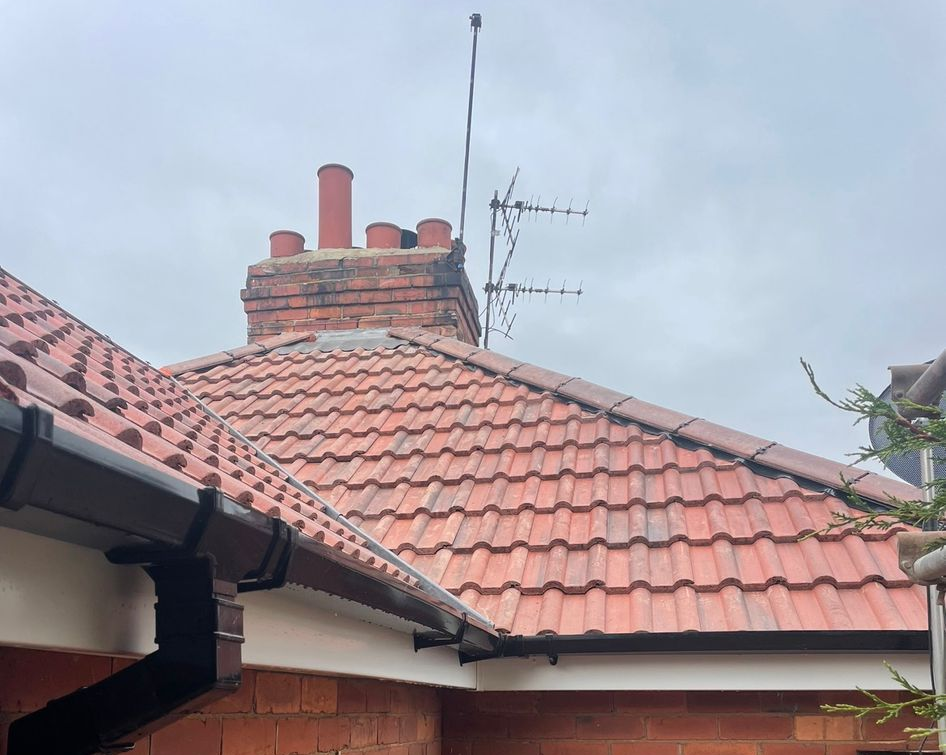
Failed flaunching. The sloped mortar collar at the top of the chimney stack that holds the pots in position and sheds water deteriorates faster than most other exposed masonry on the building. It faces upward into rain and frost, goes through more temperature cycles than vertical surfaces, and isn't noticed until it's clearly failing. Cracked or missing flaunching allows water into the masonry and, eventually, into the chimney breast below.
Spalled and deteriorated pointing. The mortar joints on the chimney face weather faster than the same joints on a sheltered wall, because the chimney is exposed on all four sides. In Harrogate's climate, with meaningful frost through winter and the damp that comes with higher elevation, this deterioration accelerates. Pointing that looks intact from the ground can be hollow and crumbled when seen close up.
Cracked or toppled pots. Terracotta pots can crack from frost, particularly if they're taking water in through a failed flaunching and then freezing. A cracked or unstable pot is both a weather ingress risk and a physical safety risk.
Redundant chimney stacks. For stacks that are no longer in use, the options are to cap them (reducing weather ingress while maintaining some ventilation to prevent condensation), reduce them to just below the roofline (removing the exposed element entirely), or maintain them as they are. Each has different implications for appearance, planning (in conservation areas), and ongoing maintenance.
What a Proper Chimney Repair Looks Like
Harrogate Roofers & Contractors approaches chimney work from a close inspection first - the condition of the flaunching, pointing, lead flashings, and the pots themselves needs to be assessed properly before recommending what work is needed. From the ground, a lot of chimney problems are invisible or ambiguous.
A proper flaunching replacement involves breaking out the old material entirely (not just topping it up), preparing the surface, and setting new flaunching correctly angled to shed water. Repointing is raking out to adequate depth and applying fresh mortar of the correct specification - not a skim over the surface of deteriorated joints.
What It Costs in Harrogate
The main variable in chimney repair costs is access. Getting a person safely to the top of a chimney on a two-storey Harrogate property requires either scaffolding or a scaffold tower, and the access cost is often comparable to the repair cost itself:
- Access (scaffold or tower hire): £150-£350 depending on height and setup
- Repoint chimney stack: £200-£450 depending on the extent of work
- Replace flaunching: £150-£300
- New chimney pots: £80-£200 per pot including fitting
- Full chimney service (all elements): £500-£950 for most standard properties
Where a chimney stack needs reducing (for a redundant stack being taken down below roofline), this is a more substantial project - typically £800-£2,000 depending on the height being removed.
We've also covered roof repair vs replacement in Harrogate and the chimney inspection is often done as part of a broader roof condition assessment - they're accessed from the same scaffolding and it makes sense to look at both at once.
FAQ
Q: How do I know if my Harrogate chimney needs attention?
From the ground, visible signs include: pots that have shifted or cracked, mortar on the flaunching that looks crumbled or has gaps, pointing that's clearly recessed or missing between bricks. Damp patches in an upstairs room adjacent to a chimney breast are a strong indicator even if nothing obvious is visible from outside.
Q: Should a redundant chimney in Harrogate be capped or removed?
Both are valid options. Capping maintains the chimney's appearance while preventing rain ingress - the right choice where the stack is in good condition or in a conservation area where removal needs consent. Reducing to below roofline removes the maintenance liability entirely but requires more significant structural work and may need planning permission in conservation areas.
Q: What is chimney flaunching?
The sloped mortar collar at the very top of the chimney stack that holds the chimney pot in position and directs water away from the pot base. It's one of the first elements to deteriorate on an older chimney and needs to be fully replaced rather than just patched when it's failed.
Q: How often should chimney pointing be done in Harrogate?
There's no fixed schedule - it depends on the original mortar specification and the condition of the brickwork. In Harrogate's climate, many Victorian chimney stacks need repointing every 20-30 years. A visual inspection as part of a roof survey will indicate whether it's due.
Ready to work with Harrogate Roofers & Contractors?
Let's connect! We’re here to help.
Send us a message and we’ll be in touch.
Or give us a call today at 01423 423497
Agency Contact Form
More Marketing Tips, Tricks & Tools
Harrogate Roofers & Contractors